

Still Exploring?
Looks like you’ve been exploring our platform.
Want to see everything in one place?
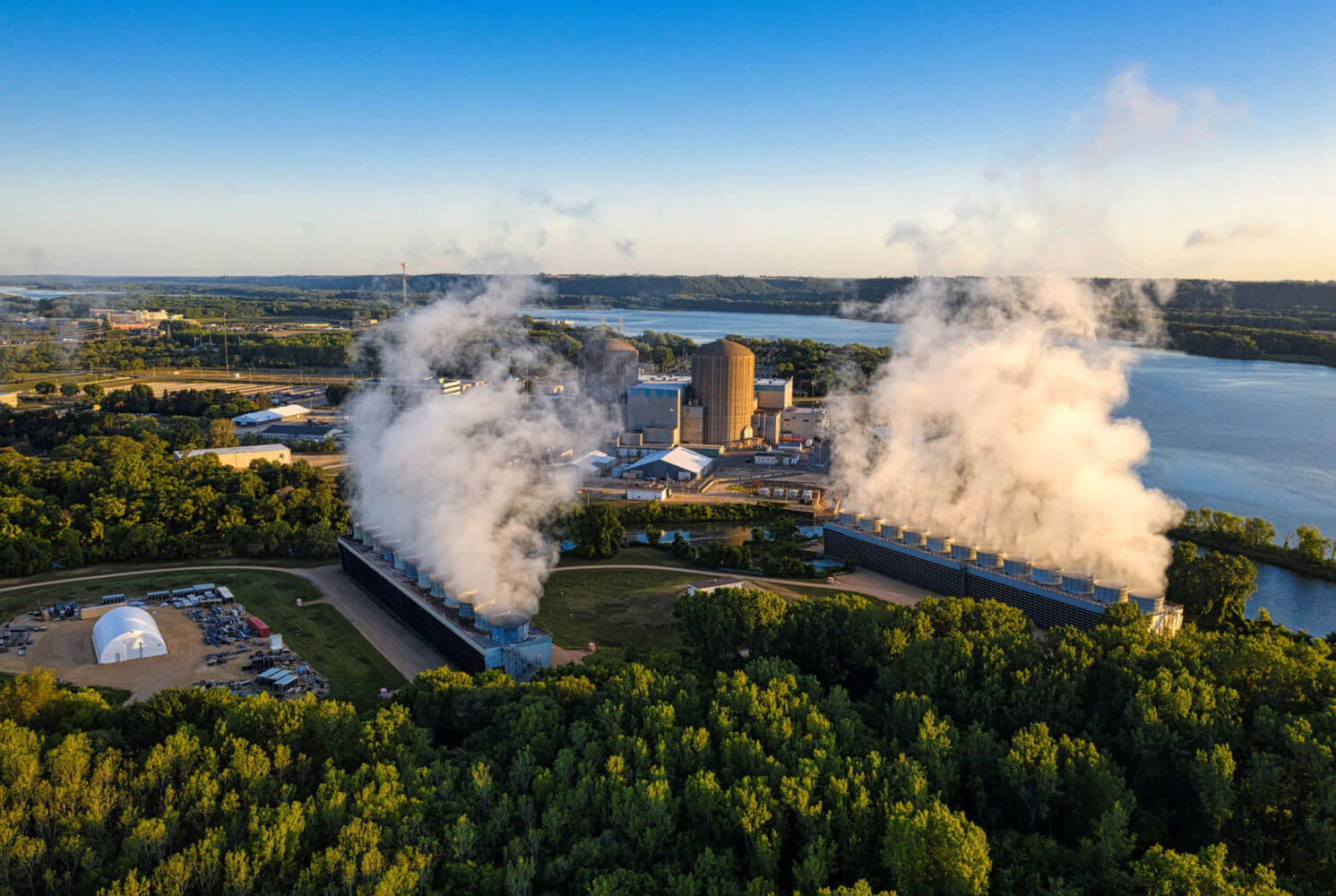
A corporate carbon footprint (CCF) is the total amount of greenhouse gas (GHG) emissions a company causes, measured in metric tons of carbon dioxide equivalent (CO2e). It covers direct emissions from company operations, indirect emissions from purchased energy, and all other indirect emissions across the value chain. With this data, companies can identify emission hotspots, set reduction targets, and manage their climate impact.
A CCF covers the whole organization over a set period, usually one year, and groups its emissions into Scope 1, 2 and 3. A product carbon footprint (PCF) covers a single product and follows its life cycle phases, as in a life cycle assessment (LCA): raw material extraction, manufacturing, distribution, use, and end of life. Companies often need both: the CCF shows where the business emits, while PCFs show how individual products contribute.
Measuring emissions delivers practical benefits beyond meeting reporting rules:
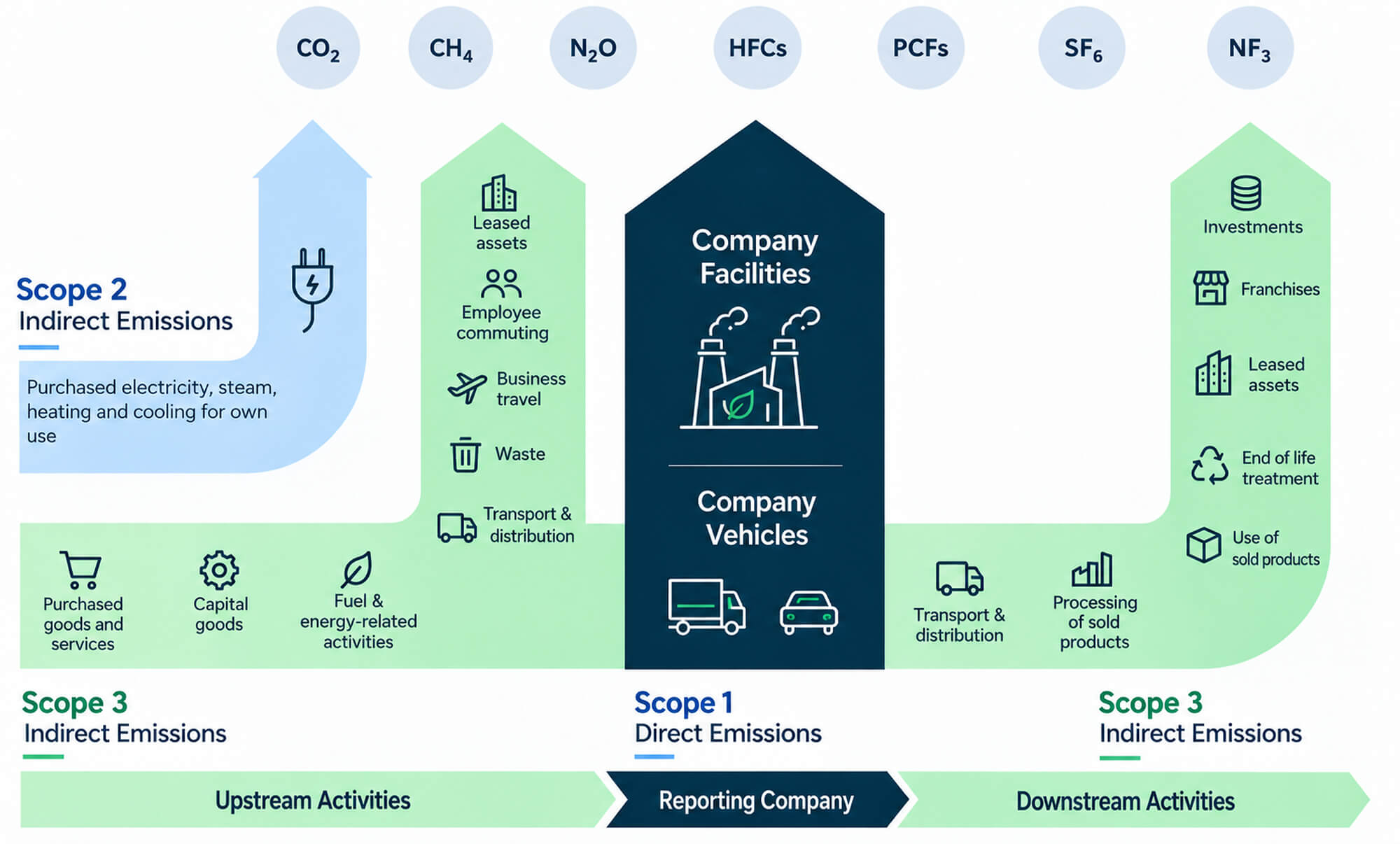
The GHG Protocol sorts a company’s emissions into three scopes. Together they make up the full corporate carbon footprint and show which emissions a company controls directly and which come from its value chain.
Scope 1 emissions come from sources a company owns or controls. Examples include fuel combustion in company vehicles, on-site fossil fuel use for heating, and process emissions from chemical reactions, such as in cement manufacturing.
Scope 2 emissions are indirect emissions from generating the electricity, heat, or steam a company purchases. They occur at the utility but result from the company’s energy use.
Scope 3 covers all other indirect emissions upstream and downstream, such as extracting, producing, and transporting purchased materials, business travel, distribution, and customer use. The GHG Protocol defines 15 Scope 3 categories. For many companies this is the largest share of the footprint, and it depends on supplier data, which makes data quality the main challenge.
Two standards are established worldwide for calculating a corporate carbon footprint. Both give companies a consistent, transparent, and comparable way to calculate and report emissions.
The GHG Protocol Corporate Accounting and Reporting Standard was developed by the World Resources Institute (WRI) and the World Business Council for Sustainable Development (WBCSD) and first published in 2001. It sets out principles and methods for measuring and managing GHG emissions and is widely used for voluntary disclosure.
ISO 14064 specifies principles and requirements for quantifying and reporting GHG emissions and removals. Part 1 covers organization-level quantification and reporting, Part 2 covers emission reduction and removal projects, and Part 3 covers validation and verification. Its structured approach suits certification and compliance purposes.
Companies calculate their footprint by combining activity data with emission factors, then use the results to focus their reduction efforts.
Activity data is a measured quantity, such as liters of fuel burned, kilowatt-hours of electricity used, or kilometers traveled. Multiplying it by an emission factor gives emissions in CO2e. Scope 1 and 2 data usually come from invoices and meters, while Scope 3 data comes largely from suppliers and other value chain partners.
With a baseline in place, companies set reduction targets and track progress against them. The Science Based Targets initiative (SBTi) validates targets that align with climate science, and CDP lets companies report their progress to investors.
In a growing number of jurisdictions, yes. Emissions disclosure rules now cover many companies in the EU, the U.S., the UK, and other regions, and they often reach companies that sell their products into those markets.
The Corporate Sustainability Reporting Directive (CSRD) requires in-scope companies to report sustainability information, including GHG emissions and Scope 3 value chain emissions. It replaces the Non-Financial Reporting Directive. The Omnibus I amendments adopted in 2026 narrowed its scope to companies with more than 1,000 employees and more than €450 million in net turnover, so check how your member state applies it.
The U.S. Securities and Exchange Commission (SEC) adopted climate disclosure rules in March 2024, but litigation stayed them and the SEC has since moved to rescind them. California’s SB 253 applies to U.S. companies with more than $1 billion in annual revenue that do business in California. It requires Scope 1 and 2 reporting from 2026 and Scope 3 reporting from 2027.
Since April 2019, Streamlined Energy and Carbon Reporting (SECR) has required large companies, publicly listed companies, and limited liability partnerships to include energy use and carbon emissions in their annual reports.
Get expert insights on corporate carbon footprints from Assent’s team of regulatory experts.
Explore our latest articles, guides, and other resources on Sustainability, and building more sustainable supply chains.

Understand scope 1, 2 and 3 emissions, including definitions, examples, how to measure them, and reduction strategies.

What is a Product Carbon Footprint (PCF)? Learn how to calculate product emissions, apply ISO 14067, and use PCF data across automotive supply chains.

Learn what life cycle assessment (LCA) is: its definition, four phases, data needs, and impact categories under ISO 14040/44.

