


What Is the EU Packaging and Packaging Waste Regulation (PPWR)?

The EU Packaging and Packaging Waste Regulation (PPWR) is designed to reduce packaging waste and create consistent sustainability requirements across EU member states. PPWR replaces the existing directive with a single legal framework, introducing requirements related to recyclability, recycled content, reuse, packaging minimization, labeling, and substances in packaging. It also increases expectations for transparency, requiring companies to maintain detailed, evidence-based data to demonstrate compliance with the PPWR regulation.

As a result, PPWR is more than a policy update: It’s a shift toward enforceable, data-driven compliance. Companies must now prove that their packaging meets EU packaging requirements, rather than simply aligning with high-level guidance.

Why Is the EU Introducing PPWR?

The EU Packaging and Packaging Waste Regulation (PPWR) is part of a broader effort to modernize the EU packaging regulation framework and reduce the environmental impact of packaging waste. Rules under the previous directive led to inconsistent implementation, limiting its effectiveness of the overall packaging waste regulatory framework across the EU.

By introducing a unified EU packaging waste regulation, PPWR aims to standardize requirements across all member states. This includes consistent rules for recyclability, reuse, and material composition labeling for sorting of packaging into the correct waste streams. It also creates harmonized datapoints for extended producer responsibility (EPR) obligations. These will make it easier for companies to comply across multiple markets.

In addition to reducing waste, the EU packaging regulation PPWR supports the transition to a circular economy. It encourages better packaging design, use of recycled materials, and systems for managing packaging life cycles.

Who Does PPWR Apply To?

Who does PPWR apply to? The EU Packaging and Packaging Waste Regulation (PPWR) applies to any organization that places packaging or packaged products on the EU market. This includes manufacturers, importers, distributors, and retailers operating within the European Union.

Does PPWR apply to non-EU companies? Yes, if they export goods into the EU market. Global organizations must meet EU packaging requirements to maintain access to European customers.

Because packaging often involves multiple stakeholders, the EU packaging regulation affects the entire supply chain. Companies must coordinate with suppliers, converters, and partners to ensure that packaging complies.

What Packaging Is Covered Under PPWR?

What packaging is covered under PPWR? The EU Packaging and Packaging Waste Regulation (PPWR) applies to all packaging placed on the EU market, regardless of material type or intended use. This includes:

  • Sales packaging (primary)
  • Grouped packaging (secondary)
  • Transport (tertiary)
  • E-commerce packaging used for transport, storage, and distribution

Under PPWR, packaging made from plastics, paper and cardboard, glass, metals, and composite materials can all fall within scope. The regulation is broad by design. Companies need to assess packaging across product lines, business units, and regions rather than focusing on just a few visible packaging formats.

This broad scope has direct implications for EU packaging requirements. To comply, organizations need a clear understanding of:

  • How packaging components are structured
  • What materials they contain
  • How those components align with evolving requirements

What Are the Key PPWR Requirements

PPWR requirements are significant because they move beyond general environmental goals and create more specific obligations that companies must operationalize. For many organizations, being able to comply with the EU packaging law will depend on whether they can collect accurate packaging data and track supplier information.

Recyclability Requirements

PPWR requirements include stricter expectations around recyclability. From January 1, 2030, packaging placed on the EU market will need to meet criteria that show it is designed for recycling and meets a minimum 70% recyclability performance classification.

This means recyclability is now a compliance issue tied to packaging materials, structure, and the ability to demonstrate that packaging meets technical expectations.

Recycled Content Targets

Another major area within PPWR requirements is recycled content. The regulation pushes companies toward greater use of recycled material for new plastic packaging.

This part of EU packaging law creates both compliance and sourcing pressure. Companies need visibility into how much recycled content is present in packaging. That information will need to be proven with documentation.

Reuse & Refill Targets

PPWR requirements also include reuse and refill targets for certain packaging applications. These targets are meant to reduce reliance on single-use packaging and support a more circular packaging system.

For businesses, reuse obligations may require operational changes beyond packaging design alone. Compliance with this part of EU packaging law could involve packaging systems, logistics, and commercial models that support repeat use.

Substances of Concern (SOCs)

Substances of concern are a core part of PPWR requirements. Companies are expected to understand the presence and concentration of certain substances in packaging and support minimization or disclosure obligations as requirements take effect.

This is one of the clearest ways PPWR raises the bar. It is no longer enough to rely on assumptions about packaging composition. Companies need supplier-backed data and documentation that can stand up to scrutiny.

Labeling Requirements

The PPWR requirements also introduce new labeling requirements. These will improve transparency, support sorting and recycling, and create consistency in communicating packaging information across the EU.

Over time, labeling obligations under EU packaging law are expected to become more detailed. Companies should prepare not only for current requirements, but also for future changes tied to digital marking and expanded information requirements.

The Biggest PPWR Compliance Challenges

What are the biggest PPWR compliance challenges? Many organizations are discovering that PPWR compliance is a data and supplier engagement challenge in addition to a regulatory challenge. Understanding the law is only one part of the problem. The harder part is collecting the information needed to prove compliance at scale.

One of the biggest packaging data hurdles is fragmentation. Packaging information often lives across product lifecycle management (PLM) and enterprise resource planning (ERP) systems, spreadsheets, packaging teams, and supplier records. That makes it difficult to build a complete and reliable view of packaging composition, materials, and supporting documentation.

Another major challenge is lack of visibility into substances. Many companies do not have repeatable ways to collect detailed substance information from packaging suppliers. This is an issue, especially when they need presence and concentration data instead of broad declarations. Supplier response issues add another layer of difficulty, since supplier responses can be slow, incomplete, or inconsistent across markets. Multi-market complexity also matters, because companies may need packaging data that supports EU requirements and other markets.

PPWR Timeline: Key Dates & Milestones

When does PPWR come into force? PPWR timeline came into force in 2025. From there, companies face a phased rollout of requirements that gradually increase the level of packaging compliance. Due to this, companies need both near-term readiness and a longer-term compliance strategy.

2025: Entry Into Force
The EU Packaging and Packaging Waste Regulation entered into force in 2025. At this time, companies began reviewing packaging scope, packaging data, and internal ownership for PPWR-related compliance work. Although not every requirement applies immediately, the 2025 milestone matters because it starts the clock. Companies that wait too long may struggle to build the systems and supplier engagement processes needed for later deadlines.
2026: SOC Minimization & Labeling Phase 1
In 2026, early requirements related to substances of concern and initial labeling and conformity activities grow more pressing. This phase increases the need for supplier data, substance visibility, and documentation readiness. For many organizations, 2026 is where PPWR becomes operational. It is not just about interpreting the regulation anymore. It is about gathering the packaging data needed to support compliance activities under PPWR.
2028: Expanded Labeling & Digital Marking
In 2028, the PPWR timeline advances with expanded labeling requirements, including more standardized approaches to marking and communicating substance-related information. This stage is important because it raises expectations for packaging transparency and labeling consistency. Companies that are still relying on fragmented packaging records or manual tracking may find this phase particularly difficult. Expanded labeling obligations depend on accurate packaging information and stronger documentation processes.
2030 & Beyond: Recyclability, Reuse & Performance Targets
From 2030 onward, the PPWR timeline includes more advanced obligations tied to recyclability, recycled content, reuse, and packaging performance. These later requirements are likely to have a broader impact on packaging design and sourcing decisions. This is where long-term preparation matters most. Organizations that build a strong packaging data foundation early will be better positioned as the regulation evolves.

What Data Is Required for PPWR Compliance?

What data is required for PPWR compliance? The PPWR data requirements include detailed information about packaging composition, performance, and compliance status. In practice, this means companies need reliable packaging compliance data that can support both internal assessments and external regulatory expectations.

At a minimum, PPWR data requirements often include:

  • Material composition
  • Recycled content
  • Recyclability information
  • Data on the presence or concentration of SOCs, heavy metals, and PFAS

The regulation also increases the need for documentation and traceability. Strong packaging compliance data is not just raw information in a spreadsheet. It includes supplier declarations, technical documentation, evidence of traceability, and records that can be used to demonstrate how packaging data was collected, validated, and maintained over time.

A critical part of meeting PPWR data requirements is the ability to compile and maintain a technical file that supports CE conformity. Under PPWR, CE conformity is a self-certification process, but it must be backed by documented proof of compliance. This technical documentation brings together multiple data points into a single, structured record that includes:

  • Packaging specifications
  • Material composition data
  • Substance information
  • Supporting supplier evidence

This technical file must be accurate and up to date. Enforcement authorities can request it at any time, and companies typically have a limited window, often as little as 14 days, to provide it.

That means organizations need a system for maintaining traceable, audit-ready packaging documentation. The ability to build and maintain this technical file is what turns packaging data into defensible PPWR compliance.
What Is PPWR Software (& Why Is It Gaining Popularity)?

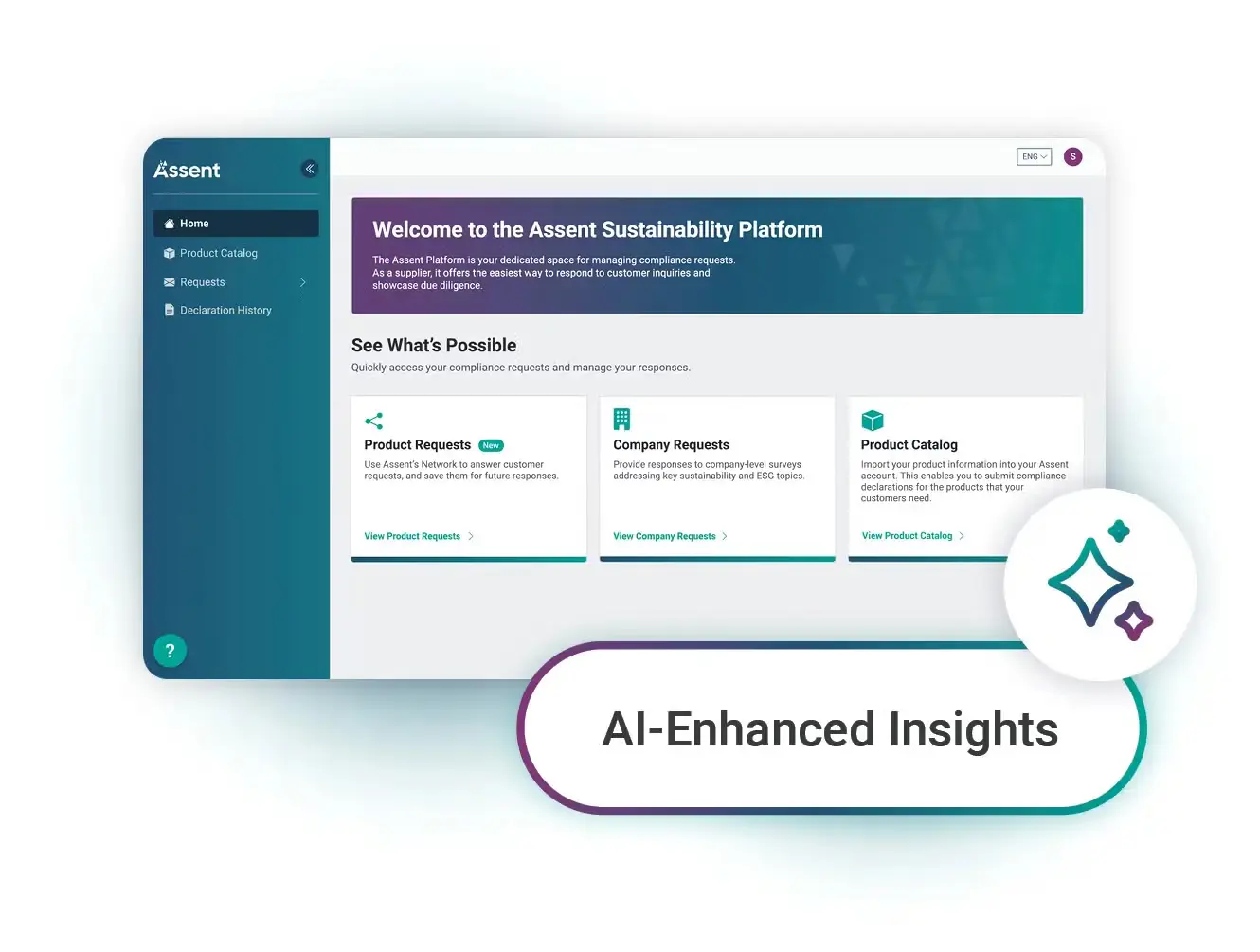
What is PPWR software? PPWR software refers to tools and platforms that help companies manage packaging compliance under the EU Packaging and Packaging Waste Regulation. In simple terms, PPWR compliance software is designed to help companies organize packaging data, engage suppliers, and maintain the documentation needed to support compliance.

The reason PPWR software is emerging now is that compliance is becoming more data-intensive. Companies are dealing with packaging complexity, supplier workflows, evidence requirements, and evolving obligations that are difficult to manage manually. Businesses are starting to look for dedicated PPWR solutions instead of relying on disconnected spreadsheets and one-off supplier requests.

A modern PPWR solution typically supports centralized data systems, supplier engagement workflows, and evidence-ready documentation. That’s why PPWR compliance software is becoming a more relevant search category as the regulation evolves.

How to Prepare for PPWR Compliance

Preparing for PPWR starts with understanding that readiness is not a one-time legal review. It is an operational process. The most effective PPWR compliance steps help companies build a repeatable system for collecting data, validating supplier information, and maintaining documentation.

  1. The first of the core PPWR compliance steps is to assess existing packaging data. Companies should identify:
    • What packaging they place on the EU market
    • How packaging components are structured
    • Where data gaps exist
  2. The second step is to identify the suppliers and partners who hold important packaging information, especially where materials and substances data must come from external sources.
  3. The next PPWR compliance steps are:
    • Collect substance data
    • Build technical documentation for the CE conformity assessment
    • Plan for reporting or future evidence requirements

In practice, that means creating processes for supplier outreach, validating incoming information, and maintaining records that can support ongoing compliance with PPWR requirements. These are all tasks that Assent’s PPWR solution can help streamline.
Streamline Your PPWR Compliance

PPWR is changing how companies approach packaging compliance. It raises expectations for packaging data, supplier engagement, and evidence-backed documentation across the value chain.

Organizations that start early will be better positioned to meet PPWR requirements, reduce compliance risk, and adapt as the EU packaging regulation continues to evolve, with granular requirements set out in delegated acts. If you’re evaluating how to operationalize PPWR compliance at scale, Assent can help you build a more structured, defensible approach.

Meeting PPWR requirements means assembling a technical file that can support CE conformity. The technical file required for CE conformity depends heavily on supplier-provided packaging data. Assent supports PPWR compliance and CE certification by:

  • Gathering and validating supply chain data
  • Helping companies collect and organize that information
  • Providing a structured, evidence-ready foundation for PPWR compliance documentation
  • Providing AI workflows to improve supplier engagement and data matching

If you want to learn more about your PPWR requirements and how Assent’s PPWR software streamlines your compliance program, speak with one of our experts.

FAQ: PPWR Compliance

Get expert insights on the EU Packaging and Packaging Waste Regulation (PPWR) from Assent’s team of product sustainability experts.

What is the EU Packaging and Packaging Waste Regulation (PPWR)?

The EU Packaging and Packaging Waste Regulation (PPWR) is a law that sets harmonized requirements for packaging sustainability, recyclability, and data transparency in the European Union. It replaces the previous directive and ensures consistent EU packaging requirements across all member states.

Who does PPWR apply to?

The PPWR regulation EU applies to any company that places packaging or packaged products on the EU market. This includes manufacturers, importers, distributors, and retailers operating within the European Union. The regulation affects multiple roles across the supply chain, making packaging compliance a shared responsibility.

Does PPWR apply to non-EU companies?

Yes, the EU packaging regulation applies to non-EU companies that export products into the EU market. Companies outside the EU must ensure their packaging meets EU packaging requirements to maintain market access. This makes PPWR a global compliance issue for organizations selling into Europe.

What are the key PPWR requirements?

The main PPWR requirements include:

  • Recyclability requirements for packaging
  • Minimum recycled content targets
  • Reuse and refill obligations
  • Management of substances of concern
  • Heavy metals and PFAS restrictions
  • Packaging labeling requirements
  • Packaging minimization

These requirements form the foundation of the EU packaging law and are being introduced in phases under the packaging waste regulation EU.

What packaging is covered under PPWR?

The EU Packaging and Packaging Waste Regulation covers all packaging placed on the EU market, including sales (primary), grouped (secondary), and transport (tertiary) packaging. It applies across materials such as plastic, paper, glass, metal, and composites. This broad scope means companies must evaluate all packaging types against EU packaging requirements.

When does PPWR come into force?

The PPWR entered into force in 2025. From there, requirements will be introduced in phases, including key milestones in 2026, 2028, 2030, and beyond. This phased approach allows companies time to prepare, but requires ongoing compliance planning under the PPWR regulation.

What data is required for PPWR compliance?

The PPWR data requirements include material composition, recycled content, recyclability performance, substance restrictions, and substance information for packaging. Companies must also maintain technical documentation and traceability records to support compliance with the EU Packaging and Packaging Waste Regulation. This makes packaging compliance data critical for demonstrating CE conformity.

How does PPWR impact supply chains?

The EU packaging regulation PPWR impacts supply chains by increasing the need for supplier data collection, validation, and coordination. Companies must gather packaging information from suppliers to meet PPWR compliance requirements. This makes supplier engagement a critical part of managing packaging compliance.

What is the difference between PPWR and the Packaging and Packaging Waste Directive?

The PPWR regulation EU replaces the previous Packaging and Packaging Waste Directive with a directly applicable regulation. Unlike the directive, which allowed for national interpretation, PPWR creates consistent rules across all EU member states. This improves alignment but increases the need for structured compliance under the EU packaging regulation.

What is PPWR software?

PPWR software refers to tools that help companies manage compliance with PPWR. These solutions centralize packaging data, support supplier engagement, and maintain documentation required for PPWR compliance. As requirements become more complex, many organizations are adopting PPWR compliance software to manage compliance at scale.