


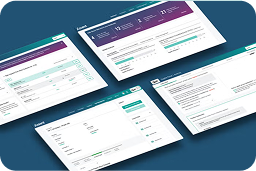
Still Exploring?
Looks like you’ve been exploring our platform.
Want to see everything in one place?
Scale LCA across larger product portfolios, from a first product carbon footprint (PCF) request to custom models. Add process and transport data, customize models, and automate up to 80% of LCA work to meet current customer requirements and prepare for emerging ones.


Automakers and other large industrial buyers increasingly need part-level product carbon footprints (PCFs) from the manufacturers they buy from, and they must be calculated using a specified method. Those requirements are becoming part of sourcing decisions.
The International Material Data System (IMDS) and Catena-X define important data and method expectations, but neither calculates the footprint. You are left managing footprints for thousands of part numbers and variants according to the method your customers require, plus you are responsible for keeping them current as designs change.

Producing one Life Cycle Assessment or Carbon Footprint with consultant support doesn’t scale. Common blockers include:















Most alternatives serve one end of the maturity curve: quick estimates that may not meet
the standards customers require, or expert tools that need a specialist for every model.
The IPOINT LCA solution covers the whole journey.
Get a first result fast, with or without in-house LCA experts. Automotive-optimized baseline models, rules-based smart mapping, and setup with Assent’s services team mean web users need no LCA knowledge, while your experts keep full control over models.
Map and calculate once, then reuse the work across products, variants, and recalculations. BOM upload, a REST API, and PLM and ERP integration extend calculation to every part number.
Reuse the IMDS material data you already report and deliver PCFs that conform to the Catena-X PCF Rulebook, the method automakers require.
Move from first PCFs to full and custom LCA, building on the data and models already in place.
Assent’s sustainability services team develops baseline models with pre-configured material entries and parameters, mapped to licensed LCA datasets. Create product variants from a baseline model, reuse it across a product family, and reach a first result without building a custom model. Custom models are available whenever you need them.

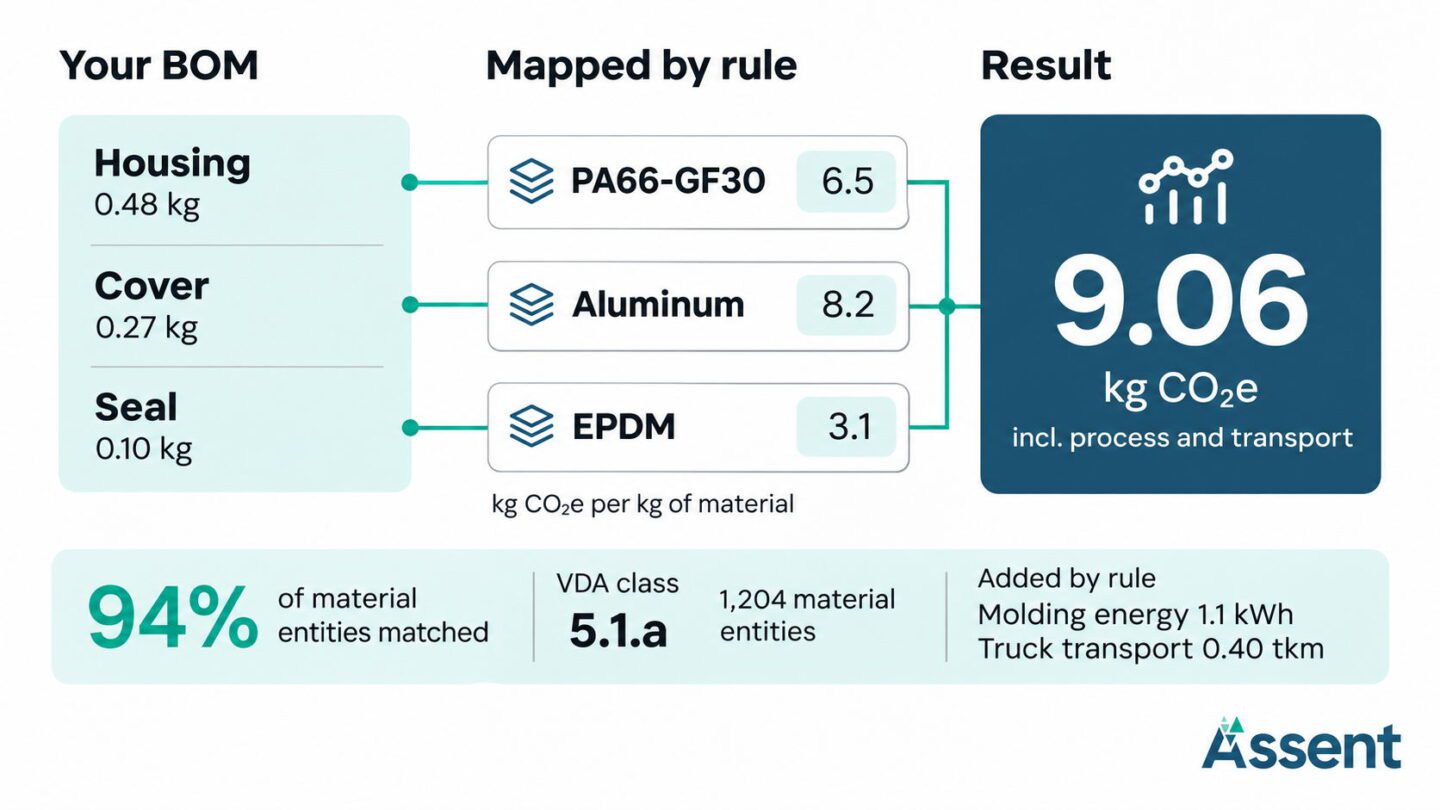
A BOM describes what a product is made of, not how it is made and shipped. Rules attach process steps, such as extrusion or molding, and transport legs to matching parts, building a cradle-to-gate inventory from your BOM. Assent’s services team configures the rules with you based on how your parts are made and shipped. Once configured, they apply in one click across every product and variant.

Rules-based mapping matches each BOM line, including the process and transport activity your rules add, to an emission dataset in your licensed background database. Matching uses material names, part names, and attributes such as VDA material classification, drawing on a library of more than 100 materials. Assent’s services team sets up the initial rules, and as you extend them, future BOMs map automatically. Coverage reporting shows how many lines matched a rule, and Assent’s services team can model materials the library does not yet hold.

Run baseline or customized models across products and variants. BOM and parameter uploads, a REST API, and PLM and ERP integrations extend calculation from individual products to your whole portfolio.

Drill down by product, process, life cycle stage, entry, and component. Sankey flow diagrams and variant comparison show where emissions concentrate, so engineering and procurement know which parts, materials, and processes to act on.

Extend assessments beyond climate change to impacts such as acidification, eutrophication, resource use, and toxicity. Models are customized to your products and processes for expert teams and complex portfolios. The solution works with standard background databases such as ecoinvent, CarbonMinds, and BAFU.

An Automotive Data Foundation
Product composition is one of the hardest life cycle assessment (LCA) inputs to assemble, but automotive manufacturers already report it through the International Material Data System (IMDS). The IPOINT LCA solution turns that existing compliance data into your LCA input, and your IMDS submissions continue unchanged.
The solution maps IMDS data with German Association of the Automotive Industry (VDA) material classification, so there is no re-keying. It works with IPOINT’s compliance platform or standalone, and results follow the Catena-X PCF Rulebook, ISO 14067, and ISO 14040/44.
of LCA work automated
of automotive product compliance experience
of LCA modeling software in the market
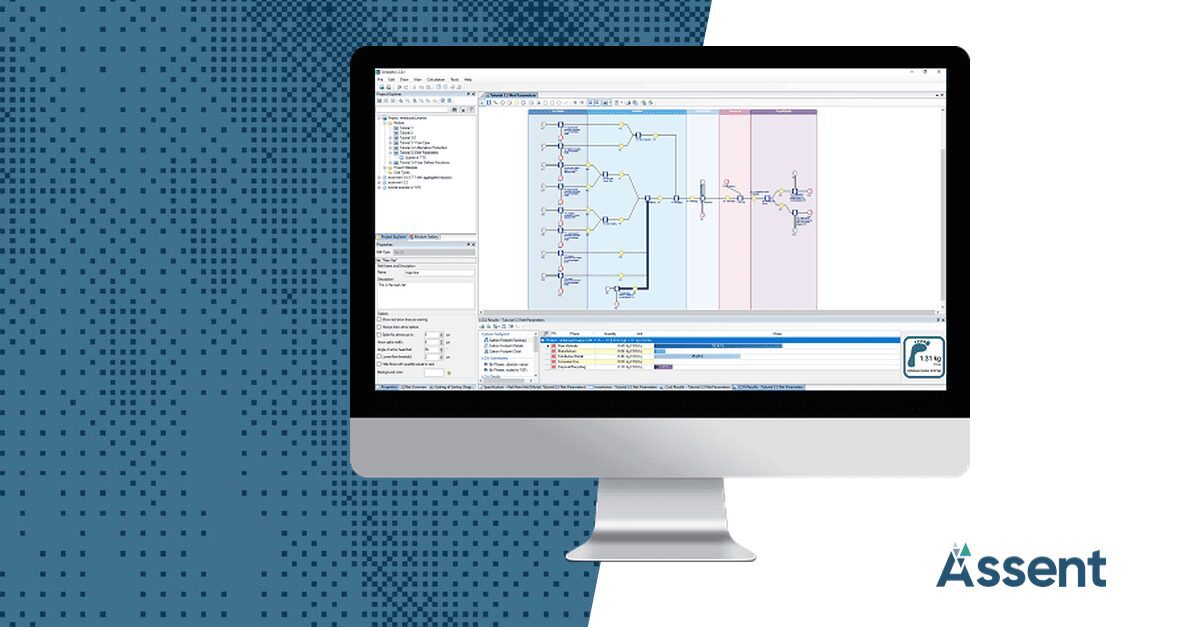
A product’s footprint is decided in how it is made. Umberto, the modeling engine behind the IPOINT LCA solution, lets in-house LCA practitioners build material and energy flow models that capture process yields, recycling loops, and energy at every step. Sankey diagrams come from the same model that runs the calculation, generic models extend one study across entire product families, and every result traces back to the process step that drives it.
Already using Umberto? It remains available and supported as part of the IPOINT LCA solution, now offered by Assent.
Straightforward answers about life cycle assessment software and the IPOINT LCA solution.

Learn what the CSRD requires for Scope 3 emissions, which companies must report, and how to build a scalable Scope 3 strategy.
Understand automotive PCF and how the Catena-X PCF Rulebook and IMDS 15 standardize CO2 data across the supply chain.

Explore the carbon footprint of car manufacturing, from emission hotspots to BEV vs. ICEV data, and how to cut emissions with better PCF data.
Explore sustainability in the automotive industry: key challenges, trends, and OEM initiatives on the road to net zero.

See why connected product and supplier data is essential for manufacturers seeking meaningful, scalable value from AI.

Assent’s Product Compliance & Sustainability Trend Study 2026, in collaboration with Pforzheim University, reveals a widening gap between the compliance and s …

Distributors are a critical part of most manufacturing supply networks, but their importance is often overlooked when industries plan for product compliance pro …
Whether you are answering your first product carbon footprint (PCF) request, preparing an EPD, or running life cycle assessments across thousands of products, see how our life cycle assessment software gets you there. Model processes in detail with Umberto, automate calculation across products and variants, and grow into full LCA on the same foundation.