
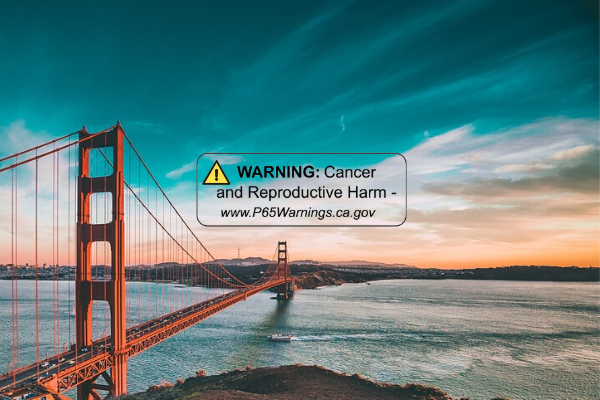
The California Environmental Protection Agency (CalEPA) has introduced a change to Proposition 65 labeling obligations. This follows a major overhaul to those same requirements that came into effect in August 2018.
CalEPA first amended labeling requirements in 2016 after the Office of Environmental Health Hazard Assessment (OEHHA) revised Proposition 65 Article 6 on Clear and Reasonable Warnings. In order to cooperate with the revised regulation, many companies were forced to reevaluate every tier of their own supply chain for substance concentrations.
In this latest update, the OEHHA indicated the short-form warning may only be allowed on small products in the future. The former ruling allowed for equal use of either the long- or short-form warnings on all products, up to the discretion of the company.
Learn more about how the Assent Sustainability Platform can help you collect substance data for compliance with Proposition 65.
The OEHHA currently allows the use of either warning label on any product. Although the OEHHA guidance does not show a change to the guideline that companies can either use the long or short-form version of the Proposition 65 warning label, it has stated that continued allowance for the truncated warning may be reviewed or changed in the coming months.
How Assent Helps Companies
Assent is closely monitoring this issue and other updates made by the OEHHA. We inform our clients of any changes to their labeling requirements, help them understand which of their products could be affected, and provide timelines associated with compliance.
By acquiring data on any chemicals considered or listed under the Proposition 65 substance list, and labeling their products appropriately, companies can avoid fines, negative media attention, legal fees and the cost of product recall. In order to do so cost-effectively, many are choosing supply chain data management solutions to automate workflows, validate data and provide suppliers with an easy-to-use portal through which they can submit data.
Assent’s Proposition 65 software can help you collect data from your suppliers and cross-reference it with new additions to the Proposition 65 chemical list.
To learn more about how Assent software helps you acquire substance data for compliance with any legislation that regulates product composition, book a live demo with our experts today.

This information is provided for educational purposes only and does not constitute legal or regulatory advice. The information is current as of the date of publication or send. Your organization remains responsible for confirming compliance obligations.