

The sourcing decisions your team makes determine which products make it to market, who you add to your catalog, and which customers trust you with more business.
The challenge? The data you need to make these decisions confidently is buried in spreadsheets, siloed, and full of gaps. Decisions get made on partial information and revisited later, placing the burden of collecting data, verifying it, and proving compliance squarely on your team. Your customer contracts, launch timelines, and market access all depend on reliable data that your current process can’t provide.
Product intelligence is what transforms your data management process, helping you make better sourcing calls while the decision is still open. It connects product, supplier, and part data into actionable insights that can be used to your business’s advantage. It provides the answers you need up front in the sourcing process and helps you protect your customer contracts. Your organization benefits from streamlined processes, reduced repetitive work, and accelerated, more confident decision-making.
As a distributor, you don’t design the part. You decide which parts your business will stand behind.
Product intelligence delivers confidence in four key decisions:
1. Which Lines Your Business Takes On
When you add a manufacturer to your catalog, you take on the job of answering requests for every part they sell you. You need to be able to respond to customers and regulators quickly with verified data on where the materials came from, what’s inside them, and whether they are compliant.
With a manual program, you often sign with a supplier first and find out what data exists afterward. Most companies don’t have deep visibility into their supply chain, with only 42% citing transparency into tier two and beyond, according to a McKinsey & Company survey in 2025.
Product intelligence, built on a comprehensive network of supplier, part, and product data, gives your business the proactive insight to see which of a manufacturer’s parts already have material data behind them, how deep that data goes, and where the gaps are. Data availability becomes part of the initial procurement decision, weighed alongside other factors like price, lead time, and quality.
Make confident sourcing decisions, faster than ever. Talk to our experts to find out how.
2. Which Parts You Can Substitute
Oftentimes compliance data is filed under the supplier that shipped the part, while the part number itself may have several manufacturers behind it. The record you have describes a purchase. The decision you need to make is about a component.
Where this presents risk to your business is when your team offers an alternate part without all the data for it available. For example, a customer needs a part you can’t source on their timeline, and you have a functional equivalent in stock from a different manufacturer. Two parts can meet the same specification and still contain different substances, because plating, solder alloy, and sub-component sourcing vary by manufacturer. A datasheet confirms the substitute performs the same. It says nothing about what the substitute is made of.
Product intelligence gives your team insights that help determine which alternatives are genuinely interchangeable, not just functionally equivalent. You can compare both sources of the part against the same criteria, confirm what the substitute actually contains, and qualify it while the order is still live rather than waiting on a supplier survey to come back. That is the difference between knowing your catalog at the purchase level and knowing it at the part level.
3. What You Promise in a Quote
For distributors, every quote is a commitment about a product you didn’t manufacture. Your customers are increasingly deciding whether to accept that commitment based on how well you can substantiate it. Data capability has moved inside the qualification process, appearing as questions in an RFP, criteria on a supplier scorecard, and conditions for staying on an approved vendor list. It is weighed alongside price and lead time, not revisited after the contract is awarded.
That standard keeps rising because your customers carry obligations of their own to regulators, investors, and their customers. WTO members circulated 5,215 technical regulation notifications in 2025, up from 4,337 the year before. Each one is a potential change to what a customer has to prove about a product before it ships. In addition, growing requirements like those under the upcoming Digital Product Passport add both specificity and volume to requests, driving deeper scrutiny into materials and components you distribute.
Renewals are decided the same way. The promise made in a quote gets tested every time a customer asks you to prove it, and the distributors who hold their contracts are the ones whose answers arrive complete on the first request. Through the Assent Network a supplier responds once and every subsequent customer request against that part draws on the same verified record. You can respond faster with data that is already collected rather than starting from scratch each time.
When your team can substantiate a quote as confidently as it can price one, customers consolidate more of their spend with you.
4. What You Do When the Regulatory Environment Changes
Shifting regulatory requirements might not initially change anything in your catalog, but the burden to prove compliance for products you did not create remains on you.
Minnesota’s PFAS in Products reporting is a good example. Initial submissions are due in PRISM by September 15, 2026, and the answer depends on whether intentionally added PFAS is present in each part you sell into the state. The regulation sets the reporting deadline, but your suppliers hold the data. Product intelligence closes that gap so you can answer at the part level from information you already have, instead of launching fresh supplier outreach for every jurisdiction that asks.
Product intelligence helps your decisions scale, no matter what the regulatory calendar looks like. You know which parts are in scope, which suppliers to engage, and you can move quickly enough to protect market access while requirements keep evolving.
For distributors, product intelligence is critical to scaling compliance response volumes as customer demand grows, without increasing manual effort or internal costs.
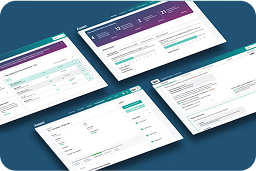
The Assent Distributor Experience automates responses, data collection, network reuse, and real-time program visibility. Learn more in our Innovation Spotlight: Introducing the Assent Distributor Experience.
The Assent Advantage
Product intelligence makes stronger sourcing decisions possible for distributors. It helps your business create a more durable catalog that has visibility down to the component level, sign contracts that renew because your answers hold up, and protect market access as requirements move. That strategic advantage comes from a procurement function built on reliable data, and only the Assent Network delivers it at scale.
The Assent Distributor Experience offers the value your business needs:
- Centralize your products, supplier relationships, declarations, and customer requests into one focused experience.
- Automate product matches, evidence reuse, supplier requests, and customer-response workflows.
- Protect customer relationships and your revenue with faster compliance responses and the ability to satisfy more requests.
Leading distributors have made product intelligence a permanent part of how their sourcing decisions get made, and they use it to their competitive advantage. Better data, stronger decisions, and a catalog your customers trust enough to give you more of their business.
See what strategic procurement looks like with the Assent Network behind every decision.

This information is provided for educational purposes only and does not constitute legal or regulatory advice. The information is current as of the date of publication or send. Your organization remains responsible for confirming compliance obligations.